How Many Posts, Rails and Pickets Do You Need? (Per 100 Feet)
Exact post, rail, picket and concrete counts per 100 linear feet, plus the spacing rules that change the math.
6 min read · Updated October 2026
The short answer
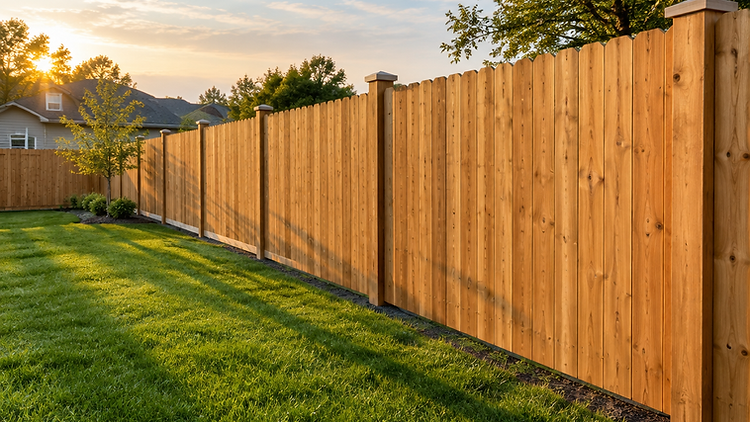
For a 6 ft wood privacy fence with posts every 8 feet, budget this for every 100 linear feet of fence:
- 14 posts (4x4). One post at each section joint, plus one at the end of the run.
- 39 rails (2x4 x 8 ft). Thirteen 8 ft sections multiplied by three rails.
- 215 pickets (1x6). With a 1/8 in. gap you use about 2.15 pickets per foot, plus a small waste allowance.
- 28 bags of concrete at two 80 lb bags per post.
- Two extra posts and one gate kit for each gate opening.
That is the same math a lumber yard uses behind the counter. FenceCalc runs it on the exact run you draw, so your numbers include corners and gate openings instead of a rough rule of thumb.
Post count follows section count, not length
Posts are driven by sections. Divide the run by your spacing, round up, then add one post for the end:
- 100 ft at 8 ft spacing: 13 sections, so 14 posts
- 100 ft at 10 ft spacing: 10 sections, so 11 posts
- 100 ft at 6 ft spacing: 17 sections, so 18 posts
Two details break the simple math. First, corners. A bent run is really two runs, so each leg rounds up on its own. Take 96 ft straight at 8 ft spacing: 12 sections, 13 posts. Bend the same 96 ft into an L of 48 ft + 48 ft and you get 7 + 6 sections, 13 + 1 posts and one shared corner. Second, gates. Each opening needs a post on both sides, and gate posts carry a swinging load, so they get set in more concrete than a line post.
Pickets: measure the gap, not the board name
Pickets are sold by nominal width but measure smaller. A 1x6 dog-ear picket is 5.5 in. wide. Divide 12 by the picket width plus the gap to get pickets per foot:
- 1x6 with a 1/8 in. gap: 12 / (5.5 + 0.125) = 2.13 pickets per foot
- 1x6 set tight: 12 / 5.5 = 2.18 pickets per foot
- 1x4 with a 2 in. gap: 12 / (3.5 + 2) = 2.18 pickets per foot
That last line is the surprise for most people: spaced picket fences use narrower, cheaper boards but a similar count per foot. Where you save money is board price, not board count. A board-on-board or shadowbox design roughly doubles the picket count.
Concrete is the line item people under-buy
A 9 in. hole 30 in. deep takes about 1.1 cubic feet of concrete, and an 80 lb bag yields about 0.6 cubic feet. That is two bags per post for wood and panel fences, and three in cold climates where holes go 36 in. deep. Gate posts should never get less than a line post. A sagging gate is almost always an under-concreted post.
Buy 5 to 10 percent extra
Boards split when nailed near an end, arrive warped, and get cut to the wrong mark. Ordering 5 to 10 percent extra on pickets, rails and posts costs a few dollars and saves a second trip. FenceCalc applies a waste percentage to every consumable line, and that percentage is adjustable in the options step.
The mistakes that cost real money
- Rounding up sections on each leg without crediting the shared corner post, which adds phantom posts.
- Forgetting that a gate opening is not fence. A 10 ft drive gate removes 10 ft of pickets and rails and one full section.
- Buying 8 ft rails when post spacing is 10 ft, then splicing boards to make up the difference.
- Setting posts without checking for irrigation, gas or electrical lines.
Draw your run in the calculator and every one of these numbers appears with local prices attached.
Turn this into your numbers
Draw your own fence run and get the itemized material list, the cost per foot and a PDF estimate in about a minute.