Wood vs. Vinyl vs. Chain Link: Which Fence Is Worth It?
A straight comparison of cost, lifespan, upkeep and privacy across the three most common residential fence materials.
7 min read · Updated October 2026
The 30-second version
- Chain link is the cheapest and lasts the longest, and gives you no privacy at all.
- Wood is the best balance of cost, privacy and repairability, and it is the only one you have to maintain.
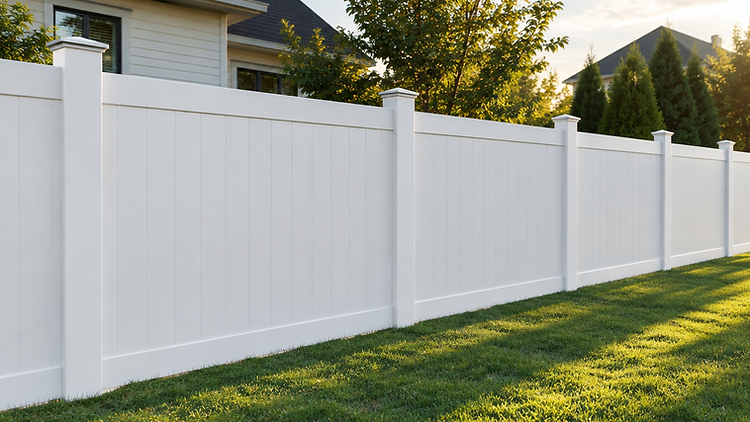
- Vinyl costs roughly double wood up front, needs nothing, and will still look new in 2035.
Cost over 20 years, not just day one
Material costs get all the attention, but the honest comparison adds maintenance:
- Chain link: $16 to $30 per foot installed, near zero upkeep, 20 to 30 year life. Cheapest by a wide margin over 20 years.
- Wood privacy: $30 to $60 installed, plus $150 to $400 per 150 ft each time you stain or seal, every two to three years, and a realistic life of 12 to 20 years.
- Vinyl: $32 to $60 installed, no upkeep, 20 to 30 year life with a rinse every few springs.
Spread over two decades, vinyl's up-front premium mostly disappears because wood asks for money and weekends over and over again. Wood still wins if you sell in five years or you enjoy the maintenance.
Privacy and looks
Chain link has no privacy unless you add slats or a screen, and it reads as utilitarian on a front lawn. Wood gives complete privacy and accepts any stain color, which is why it dominates backyards. Vinyl gives the same privacy with a cleaner, more uniform look, but the palette is mostly white, tan, gray and black, and it cannot be stained to match a house.
One practical point people forget: chain link is the only one of the three that lets wind and sun through, which matters if you grow vegetables against the fence line.
Maintenance reality
Wood needs a sealer within a year of installation and a re-coat every two to three years. Skip it and the boards gray, cup and check. Vinyl needs a rinse and will collect dirt at the bottom edge where a string trimmer sprays grass. Chain link needs nothing, but a bent section stays bent.
The case for wood
Wood is repairable at the smallest possible scale. A broken picket costs a few dollars and five minutes. It can be built at custom heights, stained to match a deck, and any competent carpenter can work on it. If you like working on your house, wood rewards you.
The case for vinyl
Vinyl is the choice when you never want to think about the fence again. It handles coastal air and wet ground that would rot wood, and it cleans up with a hose. Buy a system with thick walls and a metal or reinforced post; cheap thin-wall panels are the ones that crack in a hard freeze.
The case for chain link
If the goal is containment, chain link is the value play: a 6 ft galvanized fence with a bottom tension wire keeps most dogs in and costs less than half of wood privacy. Add privacy slats later if you decide you want screening, or plant a hedge along it.
Picking by situation
- Tight budget, dogs, big yard: chain link at 5 or 6 ft with a bottom tension wire.
- Backyard privacy you can repair yourself: wood privacy, 6 ft, three rails, posts every 8 ft.
- Never want to maintain it: vinyl privacy, 6 ft, reinforced posts, panels set with expansion clearance.
- Front yard and curb appeal: aluminum ornamental if the budget allows, wood picket if it does not.
- Modern design and no upkeep: composite panels, accepting the highest material cost of the group.
Turn this into your numbers
Draw your own fence run and get the itemized material list, the cost per foot and a PDF estimate in about a minute.