How Tall Should Your Fence Be? Height, Privacy and Local Rules
What each fence height gets you, pool code minimums, dog containment heights, and where local limits usually land.
6 min read · Updated October 2026
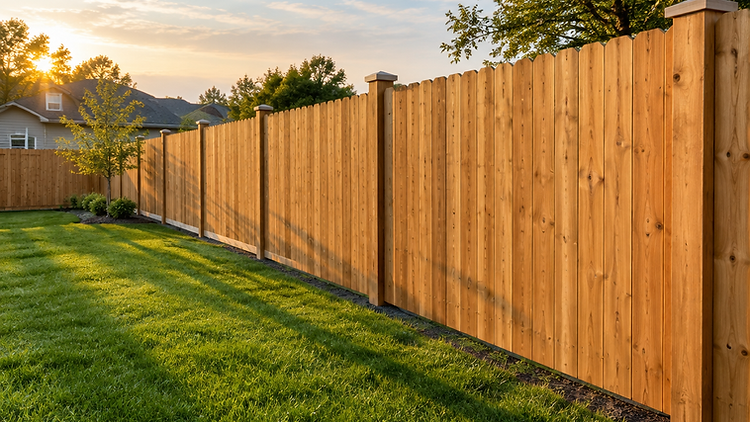
What each height gets you
- 3 ft: A boundary marker. Cheap, open, common in front yards where local rules cap heights.
- 4 ft: The classic front-yard and garden height. Sight lines stay open, nothing is private.
- 5 ft: A middle ground that keeps medium dogs in and gives partial screening, often used along side yards.
- 6 ft: The residential standard. Complete privacy for most standing sight lines, and the tallest height most districts allow without a variance.
- 7 to 8 ft: Full visual and wind blocking, sometimes required around pools, tennis courts or commercial yards. These need deeper posts, more concrete and usually a permit.
The physics behind the height limit
Wind load rises fast with height. An 8 ft privacy fence catches roughly a third more wind than a 6 ft fence, which is why taller fences need larger posts, deeper holes and more concrete. Climbing the height ladder without upgrading the framing is how fences end up leaning after the first big storm.
Pool codes: the minimum that actually matters
Most jurisdictions follow a version of the International Swimming Pool and Spa Code, which requires a barrier at least 4 ft tall with no openings a 4 in. sphere can pass through, a self-closing and self-latching gate that opens away from the pool, and no climbable horizontal rails on the pool side. Many jurisdictions now also allow a safety cover or alarm system in place of part of the barrier. Because this is a life-safety rule, it is inspected, and it overrides a general fence height limit.
Dog containment heights
- Small dogs (under 20 lb): 3 to 4 ft works if the picket gaps are tight, and a dig guard matters more than height.
- Medium dogs (20 to 50 lb): 4 to 5 ft, with a bottom rail or tension wire.
- Large, athletic dogs (50 lb and up): 6 ft, and for serious jumpers consider a lean-in top or a 6 ft fence with an angled extension.
- Diggers: every height fails without a bottom tension wire or an underground line of pavers or mesh.
Chain link and vinyl both give a smooth surface that is harder to climb than a wood fence with horizontal rails. Horizontal slat designs are, unfortunately, a ladder for a determined dog.
Privacy without going tall
If local rules cap you at 4 or 5 ft, you can still get screening:
- Plant a hedge or columnar evergreens 2 ft inside the fence line
- Add a lattice or slat topper where the code allows it (check whether it counts toward height)
- Use a dense board-on-board or shadowbox design, which blocks sight lines even at 5 ft
- Set a 4 ft fence on a low retaining wall or berm where grade allows
Sight lines and corner visibility
Two places to think about height beyond privacy:
- Front yards. A tall front fence can read as unfriendly and often conflicts with visibility triangles at intersections. If you want privacy in front, plant instead.
- Driveways and alleys. Keep gate openings and sight lines so you can see pedestrians and traffic when you back out.
Practical rule
Build the tallest privacy fence your jurisdiction allows without a variance, keep it at or under 6 ft for cost and wind reasons, and let landscaping handle the rest. Then size posts and concrete for one height up, because the wind does not read the permit.
Turn this into your numbers
Draw your own fence run and get the itemized material list, the cost per foot and a PDF estimate in about a minute.